I recently had a conversation with someone about whether females should be worried about going out on their own when they’re abroad.
I shared some concerns about why some women don’t feel safe doing that, but he didn’t seem to understand or accept what I was saying. He said he knew lots of women, and none of them had ever shared the concerns that I raised with him.
That prompted me to reflect on my own experiences. It raised the following questions:
- Have I imagined that people are interested when they were only being friendly?
- Have I thought that people were aggressive and in my face when they weren’t?
- Have I connected dots that weren’t there?
- Do I think too much of myself, and is that causing me to imagine and interpret experiences incorrectly?
- Am I that concerned about safety that I see danger when it’s not there?
- Am I focusing on experiences that have left me feeling vulnerable or fearful, without also discussing experiences that have been positive and friendly, i.e. where others have been interested, but it hasn’t caused any discomfort? Therefore, am I painting a skewed picture?
- Is it just me and the people I know who have experienced this, and does this group represent a minority of females?
I didn’t like the fact that I was questioning myself and my thinking because of this discussion, but then again…I thought it was good to be challenged and re-evaluate my thoughts, because if any of the above were true, it was definitely worth my being aware of that.
I did some research, and this is what I learned
There are plenty of women who worry about travelling on their own, and this concern is well-documented across surveys, studies, and personal accounts.
One survey of solo female travellers found that 73% worry about their personal safety, with even experienced ones (64%) sharing the same sentiment.
Another recent study showed that 88% of women who have travelled solo felt their safety was threatened in some way during the experience.
These fears often stem from risks like harassment, assault, theft, or unwanted advances, which are highlighted in numerous articles and discussions.
On X (formerly Twitter), women frequently share stories of feeling “terrified” of going out alone due to constant harassment, or avoiding solo outings altogether because of stalking, catcalling, or aggressive encounters.
It’s not rare. It’s a common thread in women’s travel experiences worldwide, regardless of destination.
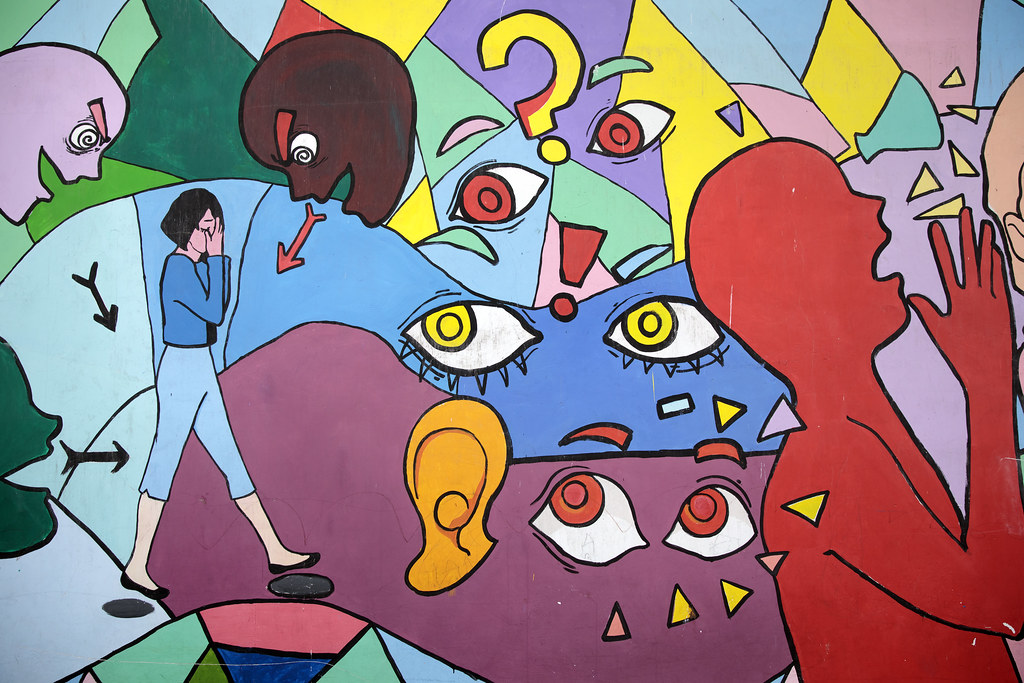
What about the ‘type’ of females that experience this? Is it a specific group? Are they in a particular location or age group? Do they belong to a particular race or culture?
The research revealed that the concern cuts across a broad spectrum, and the data highlights some patterns. Those patterns are as follows:
- Around 75-84% of solo travellers are women
- The average U.S. traveller is a 47-year-old woman
- Age-wise, it’s prevalent among all groups, but surveys break it down like this:
- Gen Z (18-29) reports the highest safety worries (73%)
- followed by Millennials (30-44) at 66%
- Gen X (45-59) at 64%
- Boomers (60-80) at 59%
- Education levels tend to be high – over 80% of surveyed solo travellers have university or graduate degrees
- In terms of class or income, the group is made up of mid-career professionals, empty-nesters, and varying income brackets
- Race and ethnicity data aren’t as granular, but communities of solo female travellers are described as exceptionally diverse, including varying nationalities and ethnic backgrounds.
- Religion isn’t specifically tied to these fears in the data, but the concerns are noted as universal across geographies, ages, and backgrounds, i.e. it’s not limited to any one group
- In terms of personality, there’s no clear profile; some women are naturally more cautious or introverted, but the fears often arise from real experiences rather than inherent traits
- Safety concerns tend to decrease with travel experience, from 78% feeling unsafe on their first solo trip to 59% after 10 or more trips
Is it only the meek and fearful who have these experiences and concerns?
The data shows that harassment and aggression towards women, for example, being approached aggressively or feeling unsafe, are widespread issues in solo travel, not just something “attracted” by certain women or noticed only by the “sensitive” or “fearful.”
Many women report these experiences regardless of their confidence or demeanour.
Could it be that he’s unaware of this because his friends haven’t voiced their fears to him?
I wonder if they simply haven’t raised this with him. If that’s the case, multiple reasons could explain it.
- They may have handled it internally and not felt the need to discuss it
- Maybe they downplayed it to avoid appearing vulnerable
- It’s possible that they haven’t encountered incidents that they perceive as severe enough to warrant discussion
The statistics
What are the potential dangers of dismissing fears as being self-fulfilling or that the person is oversensitive?
- It ignores the statistics
- They may feel that their experiences are not being accepted
- They are likely to be upset if they aren’t believed
- Worse, they may doubt their own intuition, which may lead to them inadvertently putting themselves in harm’s way
Up to 40% of women have skipped trips due to safety worries. It’s a top barrier for solo travel. Many women still travel solo successfully, but they feel that it’s necessary to take precautions.
Risks aren’t confined to travel
We need to be realistic.
Risks exist everywhere, including at home.
I am not for one minute suggesting that we should live in fear! I’ve written an article about this, and I’m a strong believer that we should be realistic and practical whilst remaining confident and live life to the full.
Here is a link to the article that I’ve written about whether we should live in fear or not: Why is it acceptable for certain groups of people to live fearfully?
Which organisations have published these statistics?
Numerous surveys, studies, and reports have been done by organisations including Gallup, UN Women, Stop Street Harassment and UK Office for National Statistics.
What about their place of residence?
Results from surveys consistently show that many women feel fearful or unsafe in their country of residence when they’re out and about, particularly when they’re approached by men in public spaces like streets, parks, or public transport.
These fears are often linked directly to experiences of street harassment, unwanted approaches, catcalling, following, groping, or more aggressive encounters.
So it’s not limited to solo travelling abroad.
Here are some key findings from multiple surveys:
Global and broad patterns
Gallup polls (including data from 143 countries) have repeatedly shown gender gaps in feelings of safety. For instance, worldwide, only about 62% of women feel safe walking alone at night in their communities, compared to 72% of men.
In many developed countries (e.g., the U.S., Australia, France, Italy), the gap is even larger, with women significantly more likely to report feeling unsafe near their homes or in public.
Data from the U.S.
In Gallup’s recurring crime surveys (e.g., around 2014-2015), about 45% of women said they would not feel safe walking alone near their home at night, compared to 27% of men.
More recent surveys (e.g., 2025 national data) indicate that walking alone at night remains the top safety fear for 67% of women, far outpacing other concerns.
Data from the UK
Multiple sources highlight high levels of unease. For example, in 2021 Office for National Statistics data, one in two women felt unsafe walking alone after dark in a busy public place (vs. one in five men), and four in five felt unsafe in parks or open spaces.
A 2021 End Violence Against Women report noted similar patterns, with many women experiencing harassment like catcalls or being followed.
Recent 2025 surveys (e.g., Girlguiding) show 56% of girls and young women (11-21) feel unsafe travelling alone, with 31% avoiding public transport entirely due to safety fears.
Street harassment prevalence and its link to fear
Organisations like Stop Street Harassment report that 65% of U.S. women have experienced street harassment, with many forms involving unwanted approaches by men (e.g., 20% followed, 23% sexually touched).
UN Women and related studies (e.g., in cities like Delhi, Rabat, or global scoping) find that 80-95% of women in some locations have faced sexual harassment in public spaces, leading to widespread fear that restricts mobility.
In the UK, over 70% of women report experiencing sexual harassment in public, with many altering their behaviour (e.g., changing routes or avoiding going out alone) to feel safer.
Recent and ongoing trends
A 2024 global WIN/Gallup-style poll found 46% of women worldwide do not feel safe walking alone at night in their neighbourhood, with higher rates in regions like the Americas (64%).
Even in 2025 reports, issues persist, including women feeling unsafe on the street or when using public transport, due to harassment.
To perceive or dismiss these feelings as abstract worries or unjustified fearfulness is naive, narrow-minded and disrespectful.
How does it affect how women behave?
Surveys show that women often change routines (e.g., avoiding certain routes, taking taxis, or not going out alone) because of harassment or fear of escalation. This is a documented, cross-cultural issue in everyday public life at home, not just when travelling abroad.
Of course, not every woman is reporting this, and there will be multiple reasons for that! However, the data shows that it’s common enough to affect a substantial portion of females and that it influences their sense of freedom and participation in public life.
Is it in our minds?
Is this perception due to unwarranted fear?
Are we interpreting men’s approaches as unsafe or aggressive when it’s actually them just being friendly?
Are we being oversensitive?
Are we attracting it?
Well…the evidence from research on women’s experiences in public settings doesn’t align with the questions above.
Studies show that street harassment (catcalling, following, invasive comments, groping, etc.) is extremely common:
When does it start, and what impact does it have?
Surveys indicate 65 – 85% of women experience it at some point, often starting young (e.g., before age 17 in many cases). My own experience aligns with this!
These incidents can cause heightened anxiety, restricted movement (e.g., changing routes, avoiding going out alone), and a constant sense of vigilance. I can relate to this as well. I somehow developed a sense of awareness, which meant I would notice when someone was about to approach me or someone around me, before they got within my vicinity.
Learned responses
Research shows that repeated harassment created a learned response of being hypervigilant i.e. constantly scanning for threats! This is a common trauma-related adaptation.
Women report feeling “on guard” in public because past incidents have shown that seemingly minor approaches can escalate or feel threatening due to power dynamics and the risk of violence.
This vigilance helps with self-protection but comes at a cost, contributing to ongoing anxiety or feeling unsafe even in familiar places.
Psychological factors do play a role. Individual differences like past trauma history can amplify perceptions of threat (e.g., survivors of assault may interpret neutral interactions more warily). However, the data consistently shows these fears are disproportionately higher in women compared to men, even in the same environments, and correlate strongly with reported harassment rates, not just personality traits.
Men in the same surveys report far lower levels of feeling unsafe walking alone at night or in public (e.g., 1 in 7 men vs. 1 in 2 women in some UK data for quiet streets after dark).
Victim Blaming!
Blaming it on mindset can veer into victim-blaming territory, where the onus shifts to the woman (“you’re too sensitive” or “you attract it”) rather than addressing the behaviour of those doing the approaching or the societal patterns that normalise it.
This overlooks how harassment often stems from entitlement, group dynamics among men (e.g., “male bonding” or showing off), or broader gender norms. It’s not the woman’s demeanour or “vibe.”
Many women describe changing nothing about themselves yet still facing persistent, unwanted attention.
That said, not every approach is aggressive, and some women navigate these situations confidently without much fear, often due to experience, location, or support networks. But dismissing widespread fears as mindset-driven ignores the stats. Harassment is a documented reality that shapes perceptions for a large portion of women, leading to real behavioural changes and emotional impacts.
Unfortunately, some people don’t voice their concerns, which means others don’t become aware of our experiences
Some downplay their experiences because they don’t want to appear weak or winghy or bigheaded.
Others have normalised it, so they notice it, are affected by it, but they accept it and don’t discuss it.
Other things to consider
What role do we all play in perpetuating patriarchy?
Do we excuse males when they ‘behave badly’ and burden the females with all the responsibility?
Do we attribute negative experiences to things like how the female was dressed, her vibe, the amount of makeup she was wearing, the way she played with her hair, her travelling alone or travelling late? Therefore, concluding that she was asking for whatever followed!
This Reel from Instagram refers to the question above.
What do you think of the above?
I’m interested in hearing about your experiences and your opinion, regardless of your gender, age, race, religion, sexuality etc.
Related content
The Gender Gap in Travel: Myths and Revelations – The New York Times
2026 Solo Female Travel Trends and Statistics
Solo Female Travel: Is It Safe? – BootsnAll Travel Articles
Solo female travellers worry about safety, distrust influencers – WiT
New Data Shows 88% Of Women Feel Unsafe Traveling Solo, But They Do It Anyway – Travel Noire
Women Are Told To Fear Solo Travel. That Is Exactly Why We Should Do It Anyway. | by Beth Santos | Medium
Solo Female Travel Safety: Advice for What Women Worry About
Honest Safety Advice for Traveling Alone as a Woman
Solo Travel Statistics, Data 2024 – 2025: Historical Trends, Sources Cited